
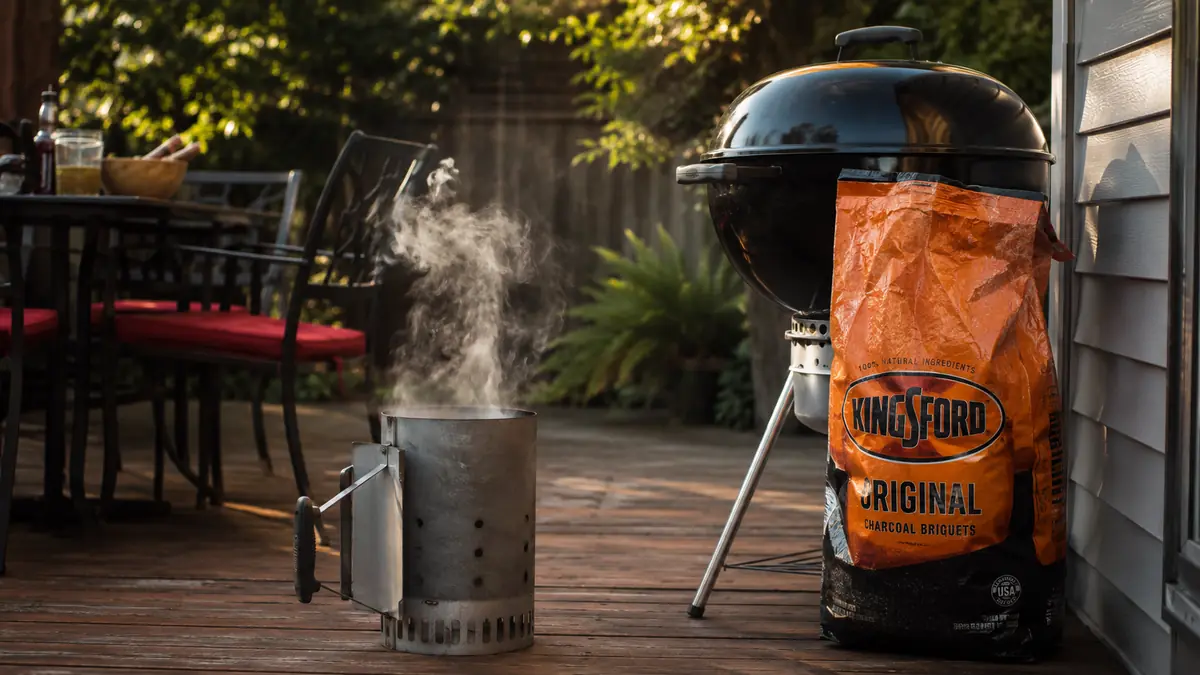
If you're standing in the charcoal aisle staring at an orange bag of Kingsford Original next to a black and gold bag of Royal Oak, here's the short answer before we get into the weeds: I buy Kingsford Original for every long cook that happens on this deck, and I have for eleven seasons running. It isn't because Royal Oak is a bad product. It's a solid briquette and I'll say so plainly below. It's because Kingsford solves the one problem that actually matters when you're running a six-hour cook on a 22-inch kettle or a low-and-slow session in my small offset smoker: total consistency, bag after bag, store after store, season after season.
Royal Oak briquettes burn a little hotter straight out of the chimney in my testing, and a couple of the bags I bought left slightly less clinker behind than Kingsford does. I'll give credit where it's due on both counts, further down. But those advantages show up in the first twenty minutes of a fire. Consistency shows up four hours in, when I'm not thinking about the coal bed anymore because I trust it, and it shows up on a random Tuesday when the only store within fifteen minutes carries one brand of briquettes and it happens to be the orange bag. That's the real test for anyone who cooks outdoors on a regular schedule instead of a couple times a summer, and it's the test Kingsford wins.
I've bought both bags dozens of times over the years, not for this article but because that's genuinely how I stock the shed. When Royal Oak was the only bag left on the shelf a few winters back, I used it without complaint. When I've had a real choice between the two, I've reached for Kingsford Original more often than not, and looking back at receipts and memory both, that pattern goes back further than I expected before I sat down to actually compare the two side by side for this piece.
| Kingsford Original | Royal Oak Classic | |
|---|---|---|
| Time to ash over | About 3.5 hours to solid gray ash on a full chimney load | Closer to 3 hours before briquettes start breaking down |
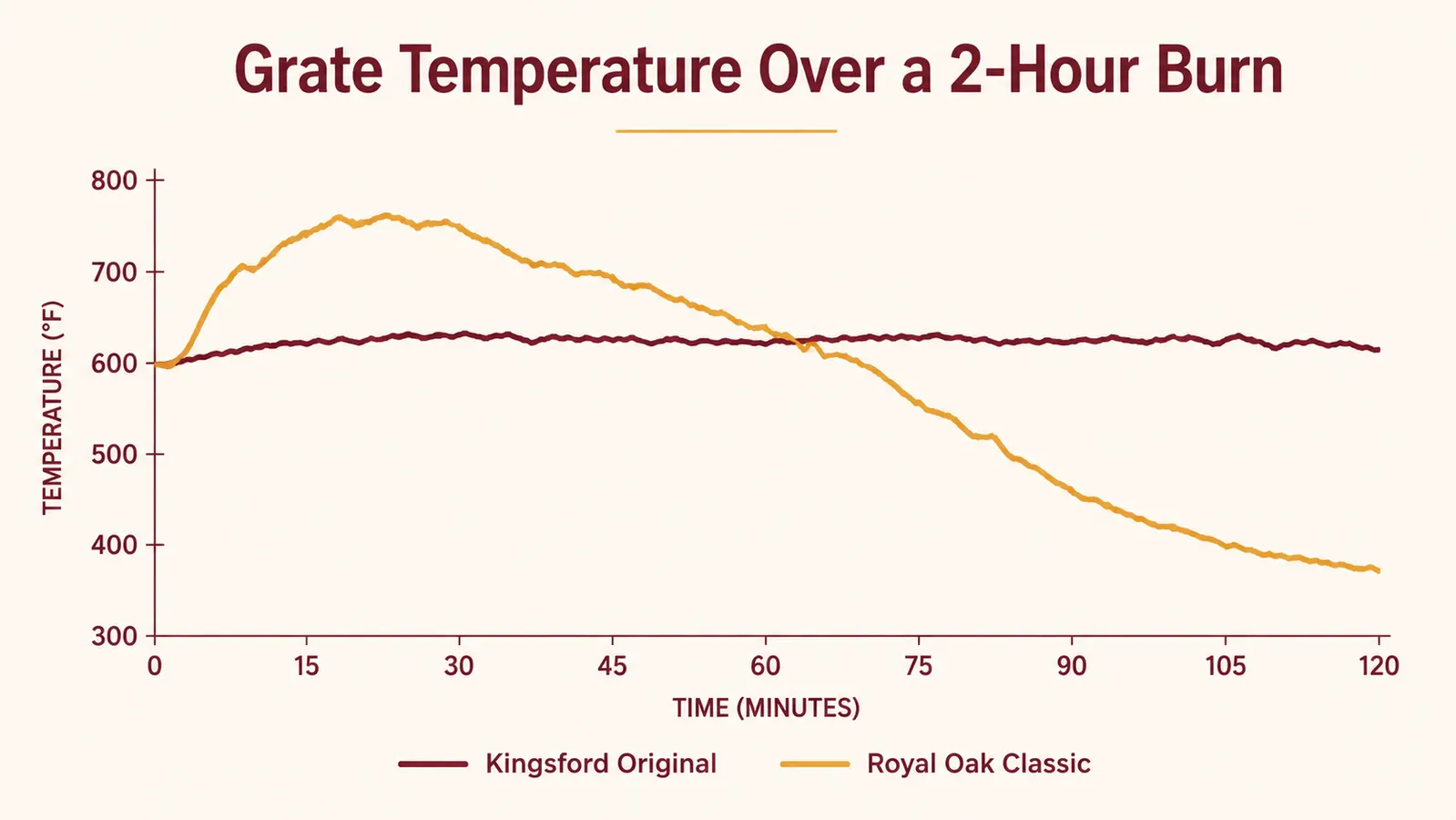
| Peak grate temperature (first 20 minutes) | Climbs into the high 600s Fahrenheit | Touches the low 700s Fahrenheit |
| Usable burn time per load | Roughly 2 hours of steady, cookable heat | Closer to 90 minutes before heat starts dropping off |
| Ash volume per load | About a quarter cup of fine gray ash | Closer to half a cup, coarser and flakier |
| Briquette size consistency | Within a few millimeters bag to bag | Noticeably more variation, occasional oversized or crumbled pieces |
| Availability | Sold at nearly every grocery, hardware, and gas station nationwide | Regional, harder to find outside certain grocery chains |
| Price per pound (12-pound bag) | About $1.50 per pound | About $1.20 to $1.30 per pound |
How I Actually Tested This
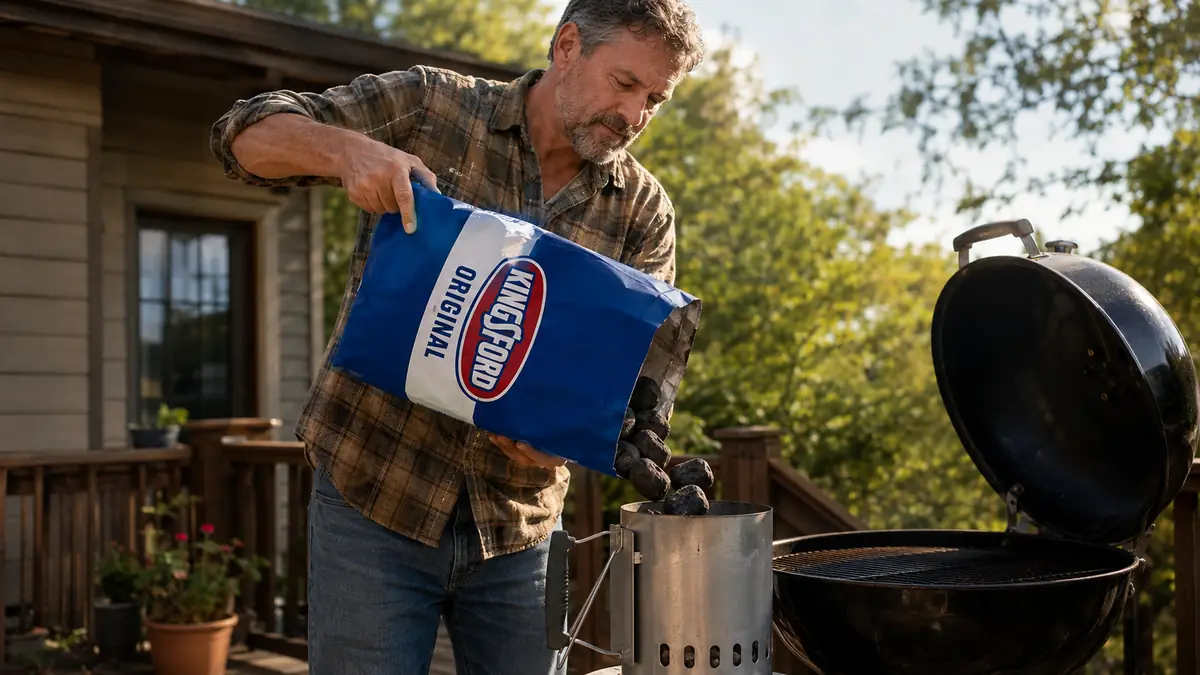
I didn't run these two brands through a lab, I ran them through the same deck I use every weekend. For six weeks I alternated brands every other cookout, always the same 22-inch kettle, the same amount of newspaper and matches to start the chimney, and the same digital probe thermometer clipped to the cooking grate at the same height. I logged the time to a stable coal bed, the grate temperature at the fifteen, sixty, and one hundred twenty minute marks, and how much ash was left in the bottom bowl the next morning.
That's not a scientific lab setup, but it's a more honest test than most charcoal comparisons bother running, because it's the actual conditions a bag has to survive: wind coming across the yard, a lid opened and closed a dozen times to check ribs, and whatever humidity Pennsylvania decided to throw at me that week. Six weeks and roughly a dozen full loads of each brand is enough to see a pattern, and the pattern held every single time I ran it.
Where Kingsford Wins
The consistency argument isn't a hunch, it's something I've watched play out bag after bag for years. I've weighed full chimney loads of Kingsford Original from three different bags bought at three different stores over the past year, and the briquette count and burn behavior barely moved. Same roughly forty-five minute climb to a stable coal bed, same steady mid-600 degree Fahrenheit grate temperature once the ash sets in, same predictable two hours of usable heat before I need to add more. When I'm running a full spread for six to eight people and juggling a kettle full of chicken thighs alongside my small offset smoker, the last thing I want is charcoal that behaves differently depending on which bag I happened to grab.
Availability is the other half of this, and it matters more than most people give it credit for. Kingsford Original is sold at practically every grocery store, hardware store, gas station, and big box retailer in the country. Royal Oak is a fine product, but it's regional in a way Kingsford simply isn't. I've driven past three stores on the way to a Sunday cookout that stock Kingsford and none that carry Royal Oak, and that's just this corner of Pennsylvania. If you cook every week the way I do, or even every other week, buying charcoal shouldn't require planning a special trip. That kind of reliability doesn't show up on a spec sheet, but it's the difference between a cookout that happens on schedule and one that gets pushed to the following weekend because the fuel wasn't in stock.
Cold and damp are where the differences get sharpest. On a raw November evening with the deck thermometer barely into the 30s, and once on a night that dropped into the teens, Kingsford lit and climbed to a stable bed within the same forty-five minute window I see in July. I've had bags of other briquettes turn stubborn and smoky in damp weather, refusing to catch evenly no matter how long I let the chimney sit. I haven't seen that from Kingsford Original in eleven seasons, through humid Pennsylvania summers and cold snaps alike, and for a fuel I'm trusting with a six-hour smoke, that kind of reliability is worth more to me than an extra fifty degrees in the first twenty minutes.
Kingsford also publishes what's actually in the bag, char, mineral carbon, limestone, and sodium nitrate, with a small amount of borax as a binder, and none of that has changed on me in eleven seasons of buying it. That matters more than it sounds like it should. A fuel that quietly shifts its binder or its wood-char ratio between bags is a fuel that can throw off a smoke ring or a burn curve you've spent years dialing in, and I have never had that happen with the orange bag.
Where Royal Oak Wins
To be fair to Royal Oak, it earns its spot on some shelves. In side-by-side chimney tests, it tends to hit a higher peak temperature faster, touching the low 700s Fahrenheit within the first twenty minutes where Kingsford tops out in the high 600s over roughly the same window. If you're doing a fast, hot sear, steaks, burgers, anything where you want maximum heat right now and don't care what the fire looks like ninety minutes from now, that head start is real and worth acknowledging.
Royal Oak also tends to run a little cheaper per pound in the regions where it's actually stocked, and a couple of the bags I've bought over the years left a slightly finer ash bed with less of the hard, glassy clinker that binder-based briquettes can leave behind on longer burns. If Royal Oak happens to be the brand sitting on the shelf at your regular grocery store, and most of your cooking is shorter and hotter rather than long and slow, there's nothing wrong with grabbing it. I don't think anyone made a mistake buying it.
There's also something to be said for Royal Oak if you're buying in bulk for a single big event rather than restocking week to week. If your local warehouse club carries the large box and your grocery store's Kingsford selection is limited to a small bag at a worse per-pound price, the math can tilt toward Royal Oak for that one cookout. I just don't build my week-to-week routine around a brand I can't reliably find twice in a row, and that's the tradeoff worth weighing honestly before you buy.
Flavor-wise, the two are close enough that I don't think most guests at a cookout could tell the difference blind, though a couple of long-time grilling friends of mine swear Royal Oak leaves a slightly cleaner, less mineral aftertaste on food cooked directly over the coals. I've never been able to confirm that in my own side-by-side tastings, chicken and burgers off both brands have tasted about the same to me, but I mention it because plenty of people bring it up and it deserves a fair hearing rather than a dismissal.
The charcoal that never makes you plan a special trip.
Kingsford Original is what I load into the chimney every single week on this deck, rain or shine, because it behaves the same way bag after bag and I can find it anywhere I go. Current price on Amazon for the 12-pound two-pack.
Amazon Check Today's Price on Amazon →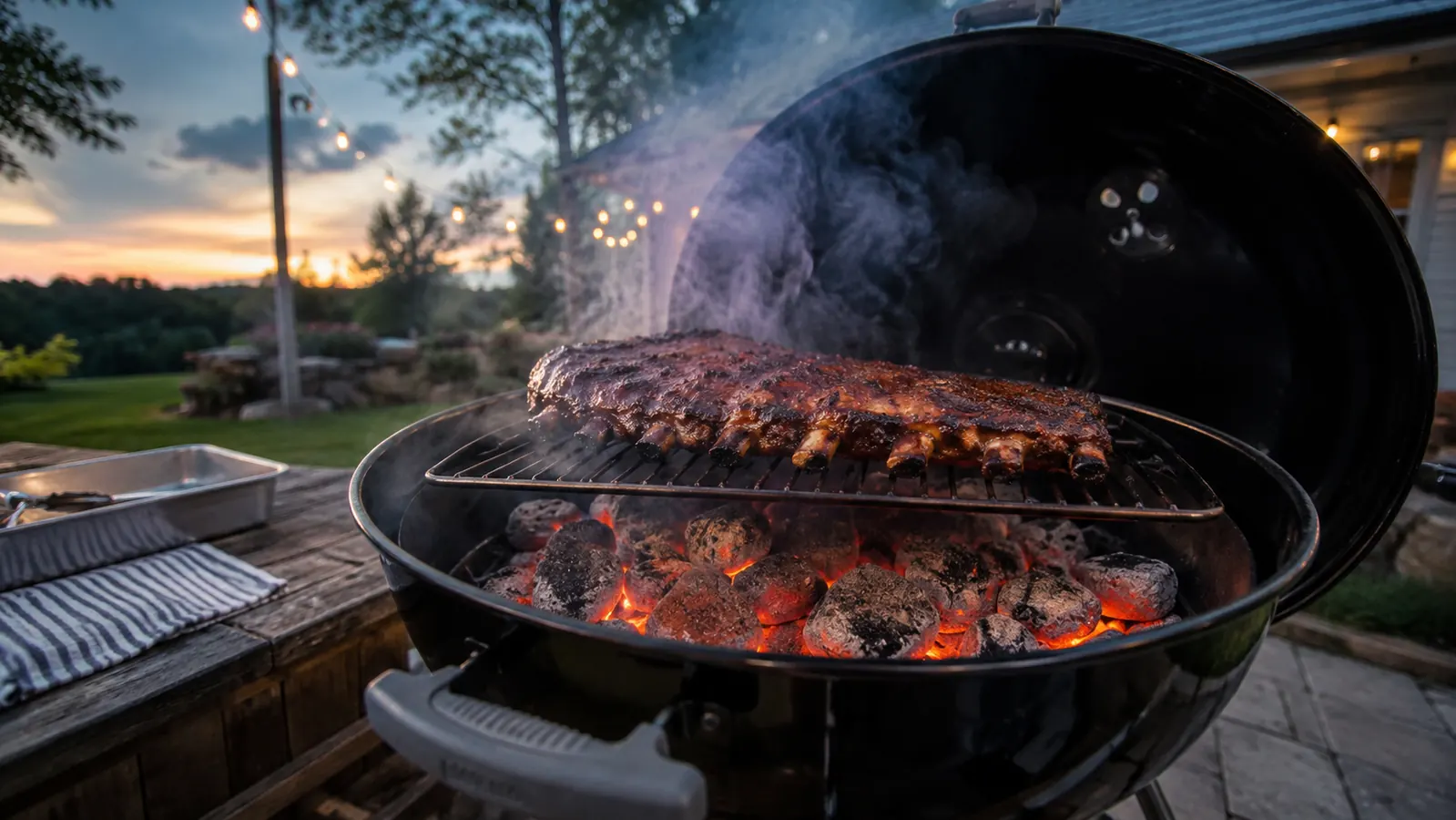
Who Should Buy Which
If you cook outdoors on a regular schedule, weekly or close to it, the way I do for six to eight people most Sundays, Kingsford Original is the one to buy. You want a fuel that behaves the same way in July heat and in a Pennsylvania cold snap that drops into the teens, and you want to be able to grab a bag anywhere without rerouting your errands around it. Royal Oak makes more sense if it's the brand your local store actually stocks, or if your cooking is mostly quick, hot, direct-heat sessions where that faster temperature climb outweighs long-burn predictability. I've written up a full long-term breakdown of how Kingsford has held up on this deck here, and the more candid version of where it falls short is in this honest review.
For everybody else, weigh it against how often you're actually lighting a fire. Someone hosting two or three cookouts a summer, using whatever bag is cheapest that week, isn't going to notice the consistency gap the way I do running a kettle and an offset smoker on a near-weekly rotation. But if charcoal is a recurring line item in your life the way it is in mine, the extra reliability of Kingsford Original pays for itself in cooks that go right the first time, without babysitting a fire that's behaving differently than it did last weekend.
One more practical note: the 12-pound two-pack is sized well for exactly the kind of weekend I run, one full chimney load for a long afternoon cook, a partial second load if the evening runs late, with enough left in the bag to top off a smaller weeknight fire later in the week. I don't find myself running out mid-cook or throwing away a half-used bag that went stale in the shed.
Bag after bag, store after store, this is the one I trust.
Eleven seasons in, Kingsford Original is still the first bag I grab before a long cook. Under two dollars a pound at the 12-pound two-pack, current price on Amazon.
Amazon See Kingsford Original on Amazon →