
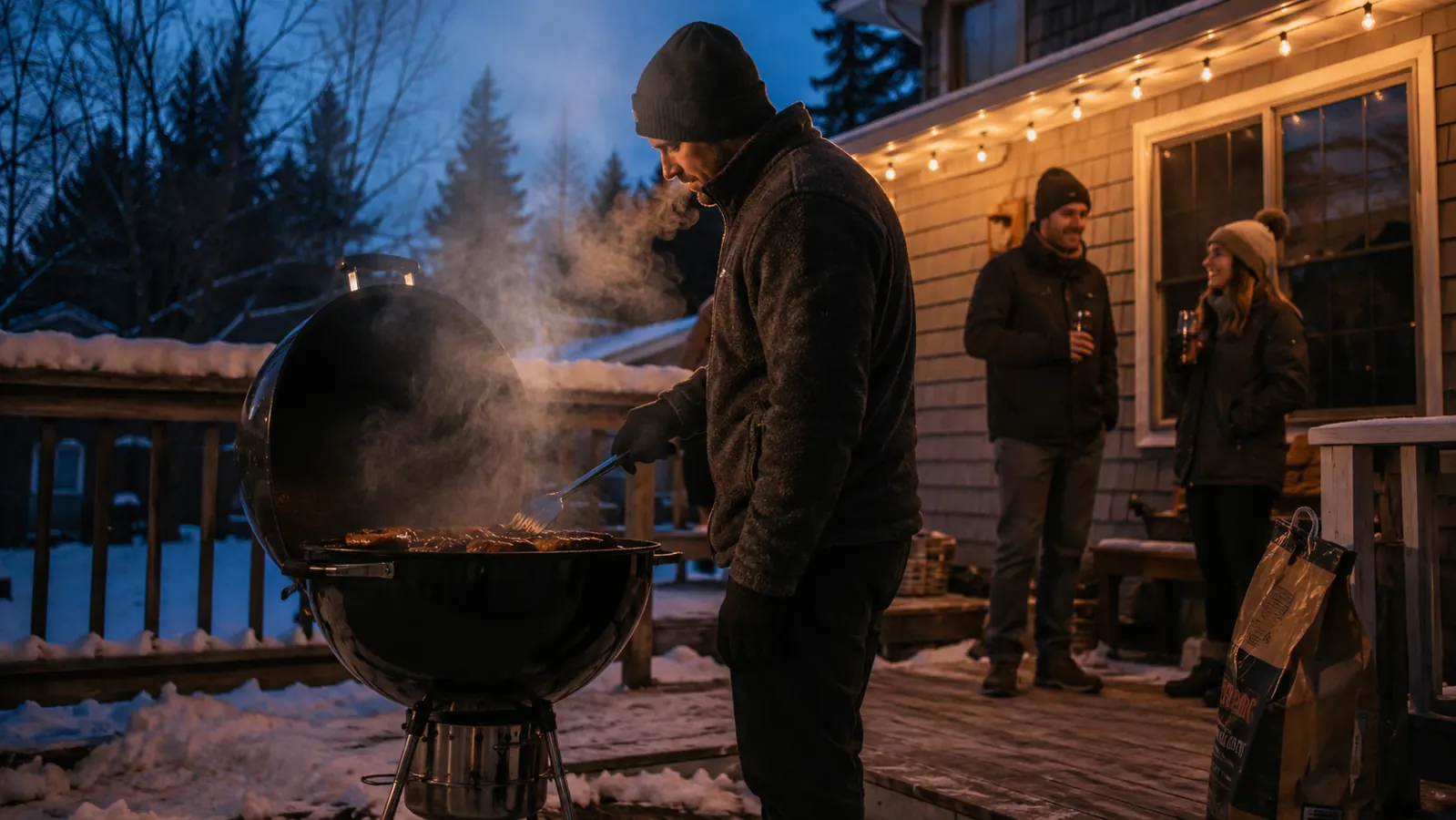
I burned my first bag of Kingsford Original back in March, when the thermometer on my deck rail still read 28 degrees at dinnertime, and I burned my most recent bag two weeks ago in the kind of July heat that makes the charcoal bag itself feel warm before it's even lit. Six months, roughly a dozen bags, every kind of cook I do on a normal weekend: burgers for six to eight people, a low-and-slow pork shoulder that ran nine hours, and a handful of quick weeknight chicken thighs when I didn't feel like firing up the offset smoker. This is what actually happened, not what the bag promises.
I've been cooking on charcoal for eleven seasons now, mostly on a 22-inch charcoal kettle with a small offset smoker for the bigger cooks, and Kingsford Original has been the default bag in my garage for most of that time. This review isn't me discovering the product for the first time. It's me trying to write down, honestly, what six more months of it looked like, including the parts that annoyed me.
The Quick Verdict
Consistent, predictable, and easy to find, with a manageable ash load. Not the cleanest-burning option if you're chasing a pure smoke flavor, but for reliability across every season I've tested it in, it's earned its spot in my garage.
Amazon Check Today's Price →Tired of charcoal that burns out before dinner's done?
Kingsford Original is the bag I reach for when I need a burn I can actually plan a cook around, hot start, steady middle, predictable finish. Check today's price on Amazon and see current stock.
Amazon Check Today's Price on Amazon →How I've Used It
My testing wasn't a controlled lab burn. It was six months of actual Sunday cookouts, weeknight dinners, and a couple of longer smokes, which I think is a more honest way to judge a bag of charcoal anyway. I ran Kingsford briquettes through my 22-inch kettle for direct-heat cooks like burgers and chicken thighs, and I used them as the base fuel underneath wood chunks for two low-and-slow pork shoulders, one in April and one in June.
For quick cooks, I light a chimney starter about two-thirds full, dump it once the top briquettes go gray, and I'm grilling within 20 minutes of walking outside. For the longer cooks, I built a snake method along the inside edge of the kettle using unlit Kingsford briquettes, then lit one end with about 12 lit briquettes from the chimney. That snake carried the shoulder through a solid seven hours before I had to feed it more fuel.
I also tried it in genuinely cold weather, which is the test most reviews skip. On a January cook where the outdoor low dropped into the teens, the same chimney-starter routine took closer to 28 minutes instead of 20, which tracks, cold metal and cold charcoal both slow things down. Once lit, though, the burn behaved the same as it does in July. That consistency across temperature swings is honestly the thing that's kept me buying it.
I also ran a smaller side test I hadn't planned on. Halfway through the six months I split one bag between two identical cooks a week apart, same recipe, same amount of food, same vent settings, just to see if I'd notice any bag-to-bag variation. I didn't. The lighting time, the color of the ash, and how long the fire held before needing more fuel all matched within a couple of minutes of each other, which told me more about consistency than any single cook could have.
What's Actually in the Bag
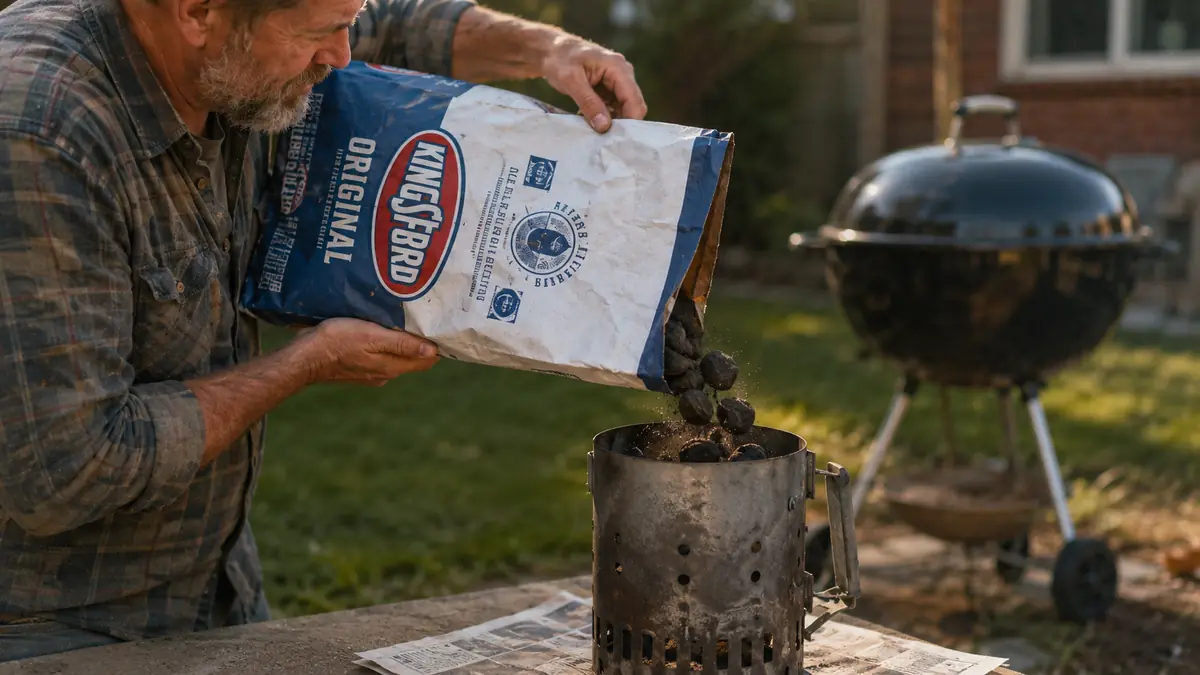
Kingsford Original briquettes are pillow-shaped and made from charred wood byproducts pressed together with a starch binder, plus a small amount of mineral char and limestone that helps them hold shape and burn evenly. That's a different product from lump charcoal, which is just chunks of hardwood charred with nothing added, and it's worth understanding the difference before you judge either one on smoke flavor alone.
In practice, that binder is why briquettes light in a more predictable, uniform way than lump does, and why they hold a steadier temperature over a longer stretch. It's also why they leave more ash behind. You're trading a slightly more neutral, less complex smoke character for a fire that behaves the same way every single time you light it, and after eleven seasons of backyard cooking, I've come to value the second thing more than I expected to when I started.
Burn Time and Heat Consistency
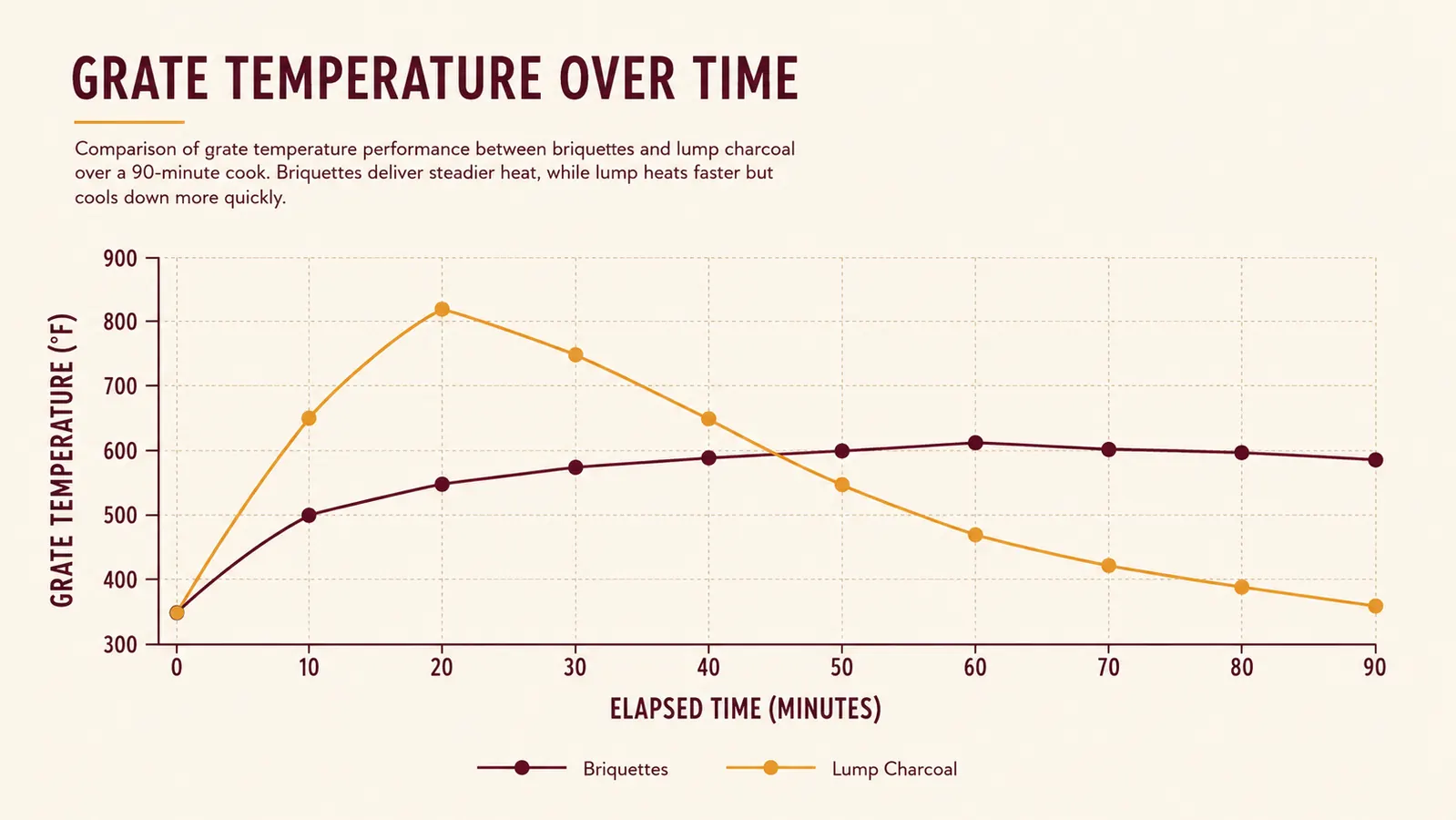
This is where Kingsford Original earns most of its reputation, and my six months of use backs it up. A full chimney of lit briquettes dumped into my kettle typically holds a grate temperature between 375 and 425 degrees for a solid 45 minutes before I need to start managing vents more actively to keep it there. That window is wide enough to get through burgers, a couple racks of chicken thighs, or a flattened spatchcock chicken without babysitting the fire.
Compare that to the lump charcoal I keep around for searing, which tends to spike hotter in the first 10 minutes and then fall off faster once it passes the peak. Lump gives me a hotter first sear, but Kingsford gives me a longer plateau, and for most of what I cook on a Sunday, the plateau matters more than the spike.
On the longer cooks, the snake method held temperature in the 250 to 275 degree range for right around seven hours before needing a top-off, which lined up close enough with what I'd read in 10 Reasons Charcoal Briquettes Beat Lump Charcoal that I stopped second-guessing my own vent settings and just trusted the fuel.
Ash Production and Cleanup
Nobody puts ash volume on the front of the bag, but if you're cleaning your own kettle every weekend, it matters. A full chimney of Kingsford Original leaves noticeably more ash in the bottom of my kettle than the lump charcoal I sometimes swap in, roughly a third of a small ash pan more per cook, in my rough estimation over a dozen burns.
The upside is that ash this fine actually helps regulate airflow a little once it builds up around the bottom vents, softening sharp temperature swings during longer cooks. The downside is obvious: more scraping, more emptying the ash catcher, and if you're running a smoker with a small ash pan like mine, you'll be emptying it more often on a Kingsford-fueled cook than on a lump-fueled one.
I've settled into knocking the ash pan out after every other cook rather than every single one, and that's been enough to keep airflow from getting choked. If you let it go for three or four cooks in a row, you'll notice the fire struggling to hold temperature, and that's on the ash buildup, not the charcoal itself. I keep a small metal bucket with a lid next to the deck rail just for spent ash, and it fills up faster with briquettes than it ever did with lump.
Lighting Behavior and the Chimney Starter
Kingsford briquettes light predictably with a chimney starter and a couple of sheets of newspaper underneath, no lighter fluid needed in my setup. From a cold start, I get visible gray ash across the top layer of briquettes in about 18 to 20 minutes in mild weather, which is fast enough that I don't feel like I'm losing daylight waiting on the fire.
I did notice a small amount of the gray-white powder coating that briquettes are known for, more than lump charcoal leaves on your hands, less than some off-brand briquettes I've tried over the years. It rinses off easily and doesn't seem to affect the burn, but if you're loading the chimney bare-handed, you'll want to wash up before you touch anything white.
One thing worth flagging: a handful of briquettes in nearly every bag I opened were visibly smaller or slightly misshapen, broken off from bigger pieces during shipping. It's never affected performance in my cooks, but if uniform, catalog-photo-perfect briquettes matter to you, know that real bags don't always look like the picture.
Cold-Weather Performance
I cook year round on my deck, including through winters here in Pennsylvania that drop into the teens, and cold weather is genuinely where a lot of charcoal disappoints me. Cheaper briquettes I've tried in the past have struggled to hold a chimney's worth of heat once the outside air gets below freezing, dying out faster than they should mid-cook.
Kingsford Original didn't do that. The lighting time stretched by roughly eight minutes on my coldest test cook, but once the fire was established, it held its temperature range just as reliably as it does in warm weather. For anyone who, like me, isn't putting the grill away from November to March, that's not a small detail.
The one adjustment I've made for cold cooks is starting with a slightly fuller chimney than I would in summer, closer to three-quarters full instead of two-thirds, just to bank a little extra heat before the fire even hits the kettle. That small change has made cold-weather lighting feel almost as fast as a mild-day one.

Value Over a Season
The bag I've been buying comes as two 12-pound bags together, and current price on Amazon puts it in the budget range for the pair, which works out to a manageable per-cook cost if you're grilling most weekends. Over six months and roughly a dozen bags used between direct grilling and longer smokes, I never felt like I was burning through money faster than I expected to.
I did compare it side by side against Royal Oak briquettes during one stretch this spring, mostly out of curiosity about whether the extra bit I pay for Kingsford is worth it. I wrote up the full breakdown in Kingsford vs Royal Oak Briquettes, but the short version is that Kingsford held temperature more consistently in my kettle, and that consistency is what I'm actually paying for.
I also priced out what a season of weekend cooking looks like start to finish. Between April and now, I've gone through around a dozen bags total, and stacking that against a season of restaurant takeout or a couple of dinners out, the charcoal itself is a rounding error. The real cost of backyard cooking is the meat, not the fuel, and Kingsford has never been the line item I worried about.
What I Liked
- Holds grate temperature in a steady 375-425 degree window for around 45 minutes per chimney
- Lights predictably with just newspaper, no lighter fluid needed
- Performs almost identically in freezing weather as it does in July, just a slower light
- Snake method held 250-275 degrees for roughly seven hours on a pork shoulder
- Widely available, easy to restock without hunting around
Where It Falls Short
- Produces noticeably more ash than lump charcoal, needs more frequent cleanout
- Some powder coating on hands during loading
- Occasional broken or undersized briquettes in the bag
- Not the cleanest smoke flavor if you're chasing a pure wood taste
Six months in, the thing I trust most about this bag isn't how hot it burns. It's how little it surprises me.
Who This Is For
If you cook most weekends, feed six to eight people at a time like I usually do, and want a fuel you don't have to think hard about, this is a solid default. It's especially good for anyone running longer cooks with a snake or minion method, since the steady burn does most of the temperature management for you. If you already read how to light charcoal briquettes for even heat, this is the bag that method was basically written around.
Who Should Skip It
If pure, unadulterated wood smoke flavor is the whole point of your setup, or you're chasing the fastest possible sear for steaks, lump charcoal is still going to serve you better, and I keep a bag of that around specifically for those cooks. And if ash cleanup is already your least favorite part of grilling, know going in that briquettes ask more of you there than lump does.
Ready to stop guessing at your fire?
After a dozen bags across every season, Kingsford Original is still the charcoal I restock without thinking twice. See current stock and today's price on Amazon.
Amazon Check Today's Price on Amazon →