
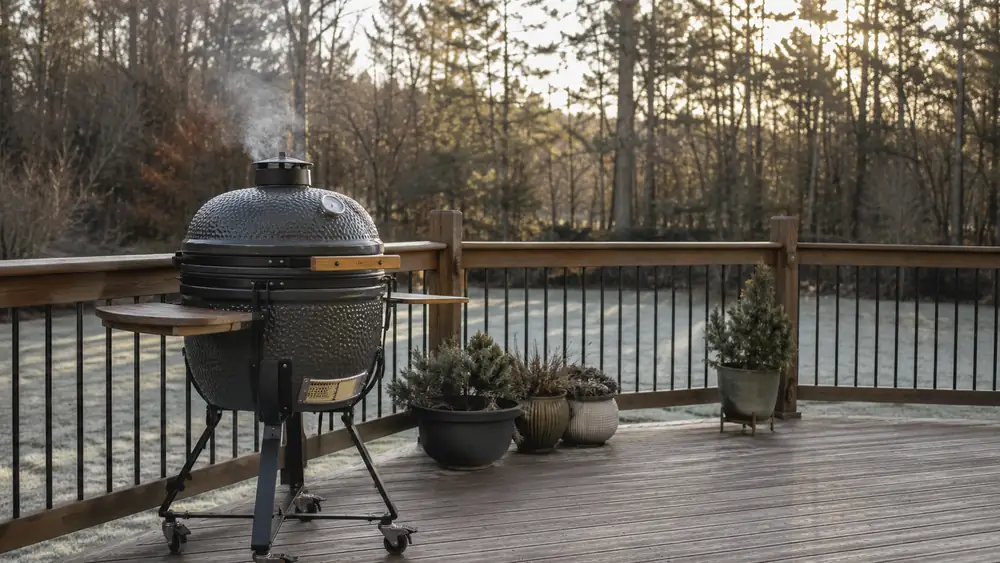
Six months ago I moved a Char-Griller AKORN Kamado Charcoal Grill and Smoker onto my 12 by 14 back deck, right next to the 22-inch charcoal kettle I have used for most of my eleven seasons of backyard cooking. I did not retire the kettle. I wanted to know if a kamado could actually earn a permanent spot next to it, not replace it for a season and then get sold off in the spring.
The short version is that it did earn the spot. I have run it through a Pennsylvania stretch of weather that dropped into the teens more than once, through a wet spring, and into a summer of Sunday cookouts for six to eight people. The AKORN is not the grill I reach for on a Tuesday when I want smoke rings on a couple of burgers in twenty minutes. It is the grill I reach for when I want a 14-hour pork butt to hold at 225 degrees overnight without me getting out of bed to check it.
The Quick Verdict
A genuinely capable kamado for a real fraction of what a solid-ceramic competitor costs, with a couple of build compromises worth knowing before you buy.
Amazon Check Today's Price →Still Cooking on a Kettle That Can't Hold Heat Overnight?
The Char-Griller AKORN holds a steady 225 degrees for hours on a single load of charcoal, something my old kettle was never built to do on its own. See today's price on Amazon.
Amazon Check Today's Price on Amazon →How I've Used It
I did not do a single test cook and call it a review. Over six months the AKORN has cooked ribs, two pork butts, a beer-can chicken, a dozen or so weeknight grilled dinners, and one Thanksgiving turkey I was genuinely nervous about. I ran it low and slow more than I ran it hot, mostly because that is the gap it fills next to my kettle and my small offset smoker.
I did not baby it either. It sat outside uncovered for the first six weeks before I bothered ordering a cover, through several days of steady rain. That was partly laziness and partly curiosity about how the gasket and the powder coat would hold up. I wanted to know what this grill looks like after a season, not after a weekend.
I also tracked fuel use out of curiosity more than necessity. A typical long cook eats through roughly half a 20-pound bag of lump charcoal or briquettes, depending on outdoor temperature, which is noticeably less than what the same length of cook demands from my offset smoker.
If you are still deciding between a kamado and a straight offset, I laid out the tradeoffs in more detail in 10 Reasons a Kamado Grill Cooks Better, and if you want the direct comparison against the more expensive ceramic option, I wrote a separate breakdown at Char-Griller AKORN vs Kamado Joe Classic.
Build Quality: Steel, Not Ceramic, and What That Actually Means
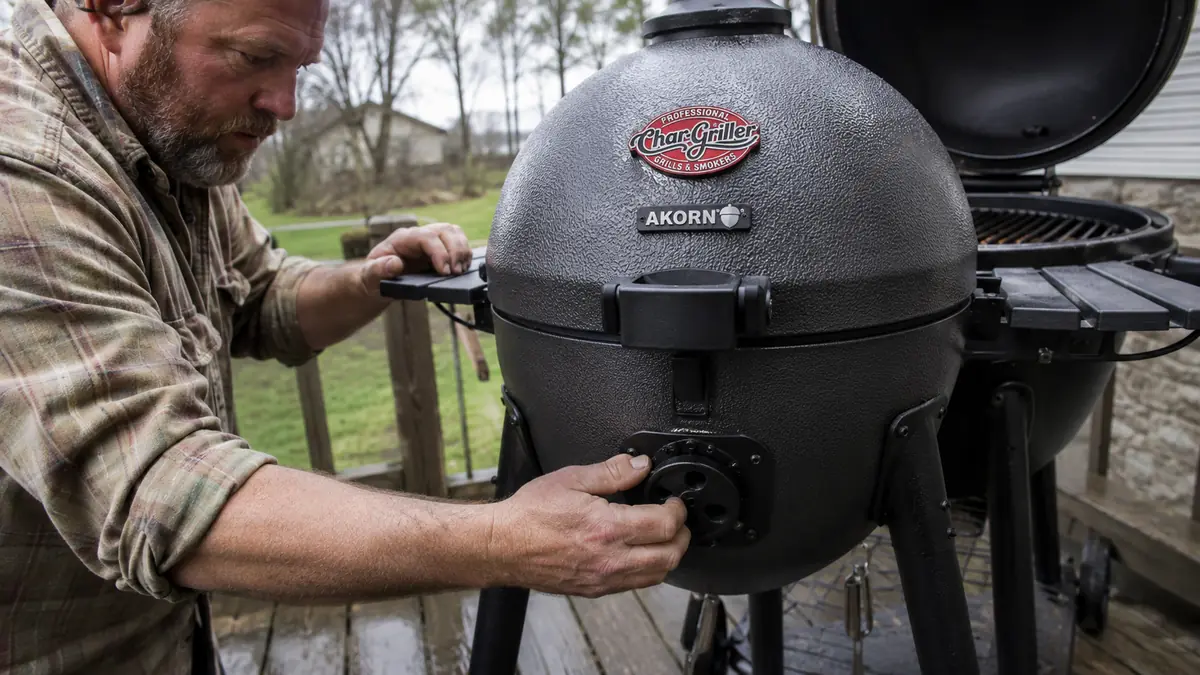
The Char-Griller AKORN is double-walled steel with a ceramic-fiber insulation layer sandwiched between the panels, not solid ceramic like the higher-priced ceramic kamados. That is the single biggest thing to understand before you buy one. It means the AKORN is lighter, it is far less likely to crack if you bump it or knock it over, and it costs a real fraction of what a solid-ceramic kamado runs at current Amazon prices. It also means the insulation layer is doing more of the work than the shell material itself, and the gasket becomes more important to how well the whole thing holds heat.
The felt gasket that seals the lid is decent out of the box. Mine compressed unevenly on the hinge side within the first two months, enough that I could see a thin line of smoke escaping there on windy days. It did not ruin any cooks, but it meant the vents needed a slightly heavier hand to hold temperature once the seal loosened. Char-Griller sells a replacement gasket kit, and I would budget for one within the first year rather than treat it as a maybe.
The cast iron cooking grates are the part I have the fewest complaints about. Across the 445 square inches of cooking area, they have held their seasoning well as long as I oiled them after cleaning, and they hold heat evenly enough that I have not had the hot-spot problems I got used to on cheaper offset grates over the years.
The side shelf and handles are the weakest hardware on the grill. The plastic handle on the lid has stayed cool enough to grab without a glove even after a long high-heat cook, which I did not expect, but the folding side shelf has a noticeable wobble that a couple of extra screws fixed on my unit.
How It Holds Temperature Over a Long Cook
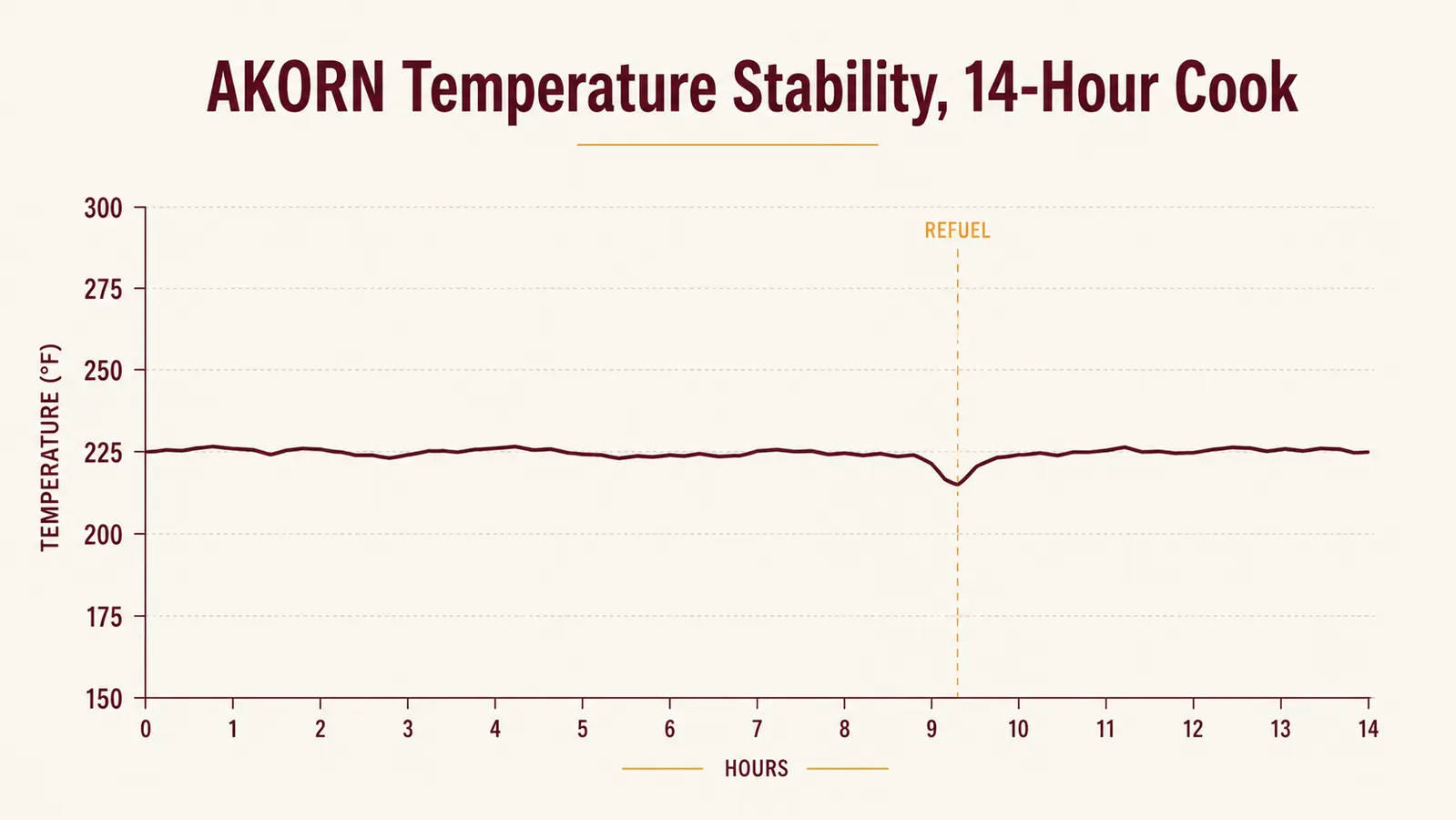
This is where the AKORN earns its keep. On a 14-hour pork butt, I loaded the firebox once, set the bottom vent to roughly a quarter open and the top damper to a hairline crack, and the temperature held between 220 and 235 degrees for the entire cook without me touching it again. That kind of stability is not something my 22-inch kettle can do without a lot more babysitting, and it is the entire reason the AKORN has stayed on the deck instead of getting sold off after one season.
Getting to that stable point takes practice. My first three cooks ran hotter than I wanted because I opened the vents too far trying to speed up the initial climb, then had to fight the temperature back down for twenty minutes. By cook four I had a rough vent chart taped inside my head, and by cook six I did not need it anymore.
In colder weather, when the deck temperature sat in the teens overnight, the AKORN used noticeably more charcoal to hold the same 225 degrees than it did in July. That is normal for any kamado in cold weather, but if you cook through real winters like I do, plan on refueling a long cold-weather cook once partway through rather than expecting the same single-load performance you get in summer.
What Six Months of Cooks Actually Taught Me
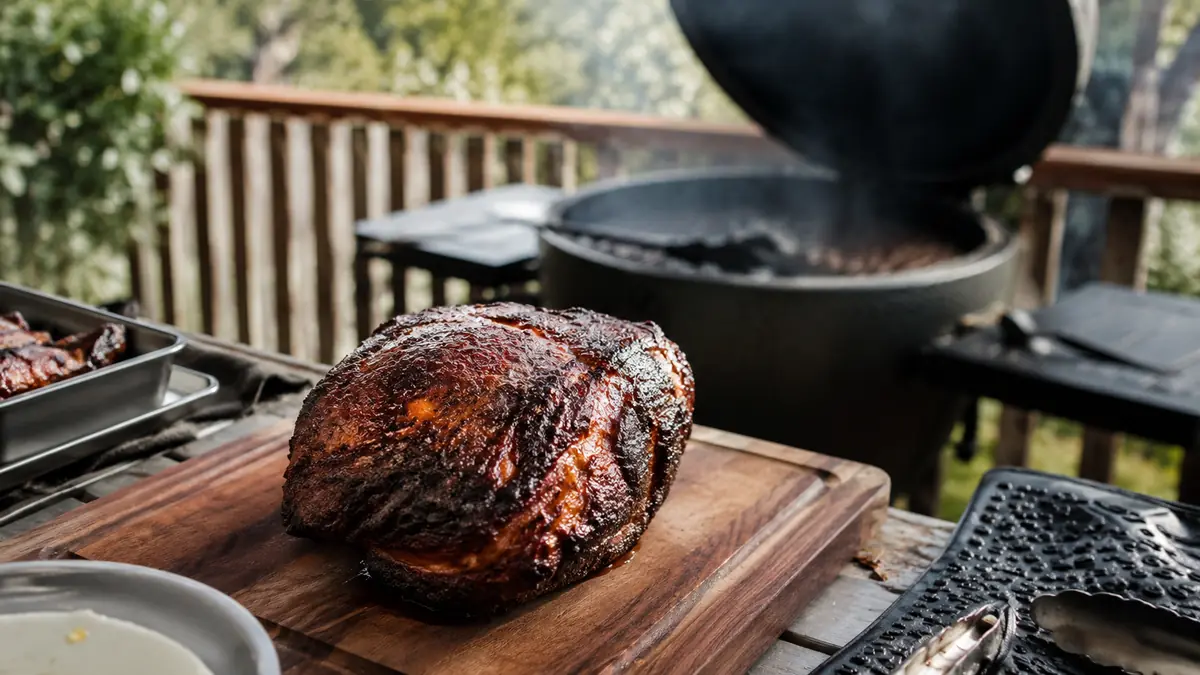
The best cook I have done on it was a pair of pork butts for a backyard gathering of six to eight people, both pulled apart at 205 degrees internal with almost no attention from me between the 9pm firebox load and the 11am pull the next day. The worst cook was an early attempt at high-heat seared steaks, where the AKORN took nearly 20 minutes longer to reach 500 degrees than I expected, because I had not fully opened both vents and misjudged how much airflow a kamado actually needs to run hot.
Cleanup is genuinely easier than I expected from a charcoal grill. The ash pan slides out from the bottom, and most of a normal cook's ash fits in it without needing a mid-cook dump. I still run the vents wide open for 15 minutes after a greasy cook to burn off residue before shutting it down, which keeps the inside from getting gummy between uses.
I have also used it for two pizza nights with a stone set directly on the cast iron grates, running the AKORN up around 550 degrees. It held that heat well enough for a consistent bake, though getting there took real patience with the vents and is not something I would attempt on a weeknight when dinner needs to happen fast.
Alternatives I Considered Before Buying
Before I bought the Char-Griller AKORN, I looked hard at a solid-ceramic kamado from a more expensive brand, a mid-range pellet smoker, and just adding a second offset alongside the small offset smoker I already run. Each of those had one deal-breaker for what I actually needed on a 12 by 14 deck that already has two cookers on it.
The solid-ceramic option would have handled temperature swings slightly better and probably would have needed less gasket attention over the years, but it also weighs close to twice as much and runs well into the low four hundreds and up before you add a stand or a cover. For a third cooker on an already-crowded deck, I could not justify the extra cost and the extra bulk for a stability gain I was not sure I would actually notice most weekends.
A pellet smoker would have been easier to start and easier to hold temperature on without touching a vent, but it also means electricity dependency and a hopper to keep filled, and it trades away the actual charcoal flavor that is the reason I wanted a dedicated smoker in the first place. The AKORN kept charcoal in the loop while still giving me set-it-and-forget-it hours, which is the specific gap none of the alternatives filled as cleanly.
Assembly and Maintenance After Six Months
Assembly took me a little over an hour working alone, mostly because the instructions assume you have a second set of hands to hold the body steady while you attach the cart and wheels. It is not difficult, just easier with help. Once it was together, I did not need to touch a wrench again until I replaced the gasket.
Rust has shown up in exactly one place, a small patch on the underside of the ash pan where moisture pooled during those first six weeks I left it uncovered. It has not spread and it does not affect function, but it confirmed that a cover is worth the modest cost, even though the powder coat on the visible surfaces has held up without a single chip or fade spot.
I clean the interior every four or five cooks rather than every single time, mostly just knocking loose carbon off the grates with a wire brush and emptying the ash pan. The locking lid latch, which keeps wind from slamming the AKORN open mid-cook, has stayed tight and has not loosened with regular use the way some cheaper hinges do.
What I Liked
- Holds 225 degrees for 12+ hours on a single charcoal load
- 445 square inches of cooking area fits two pork butts or a full rack of ribs plus sides
- Cast iron grates season well and resist warping
- Meaningfully lighter and less fragile than a solid-ceramic kamado
- Locking lid keeps the AKORN from blowing open in wind
Where It Falls Short
- Factory gasket compresses unevenly within a couple months and will likely need replacing
- Slower to reach high searing temperatures than a kettle grill
- Uses noticeably more charcoal in cold weather
- Bottom vent mechanism can bind up if ash isn't cleared regularly
The AKORN is not the grill I light up for a fast Tuesday dinner. It is the one I trust to hold 225 degrees overnight without checking on it.
Who This Is For
The Char-Griller AKORN makes the most sense for someone who already grills regularly and wants to add real low-and-slow smoking without spending what a solid-ceramic kamado costs. If you cook for six to eight people on weekends and want one vessel that can hold steady heat for half a day unattended, this is a legitimate way to get there without babysitting a stick-burner.
It also suits someone who already owns a kettle or a basic charcoal grill and has hit the ceiling of what that grill can do unattended. I did not buy the AKORN as a first grill. I bought it because I wanted a second cooker that could run overnight without turning into a chore, and that is exactly the role it has settled into after six months.
Who Should Skip It
If you mostly want fast weeknight grilling, a kettle or a gas grill will get you to dinner faster with less of a learning curve. And if you have the budget and want the added durability of solid ceramic construction with a gasket that seals a bit more consistently over years of use, it is worth reading my honest review of the AKORN's tradeoffs before you commit, since a heavier ceramic kamado is a fair alternative when price is not the deciding factor.
It is also not the right pick if you are tight on deck or patio space and only want one cooker total. The AKORN earns its spot alongside another grill more than it replaces one outright, at least in my experience running it next to a kettle and an offset smoker.
Ready to Stop Babysitting Your Smoker Overnight?
Six months in, the Char-Griller AKORN is still the grill I load once and walk away from for a 14-hour cook. Check today's price on Amazon before you decide.
Amazon Check Today's Price on Amazon →