
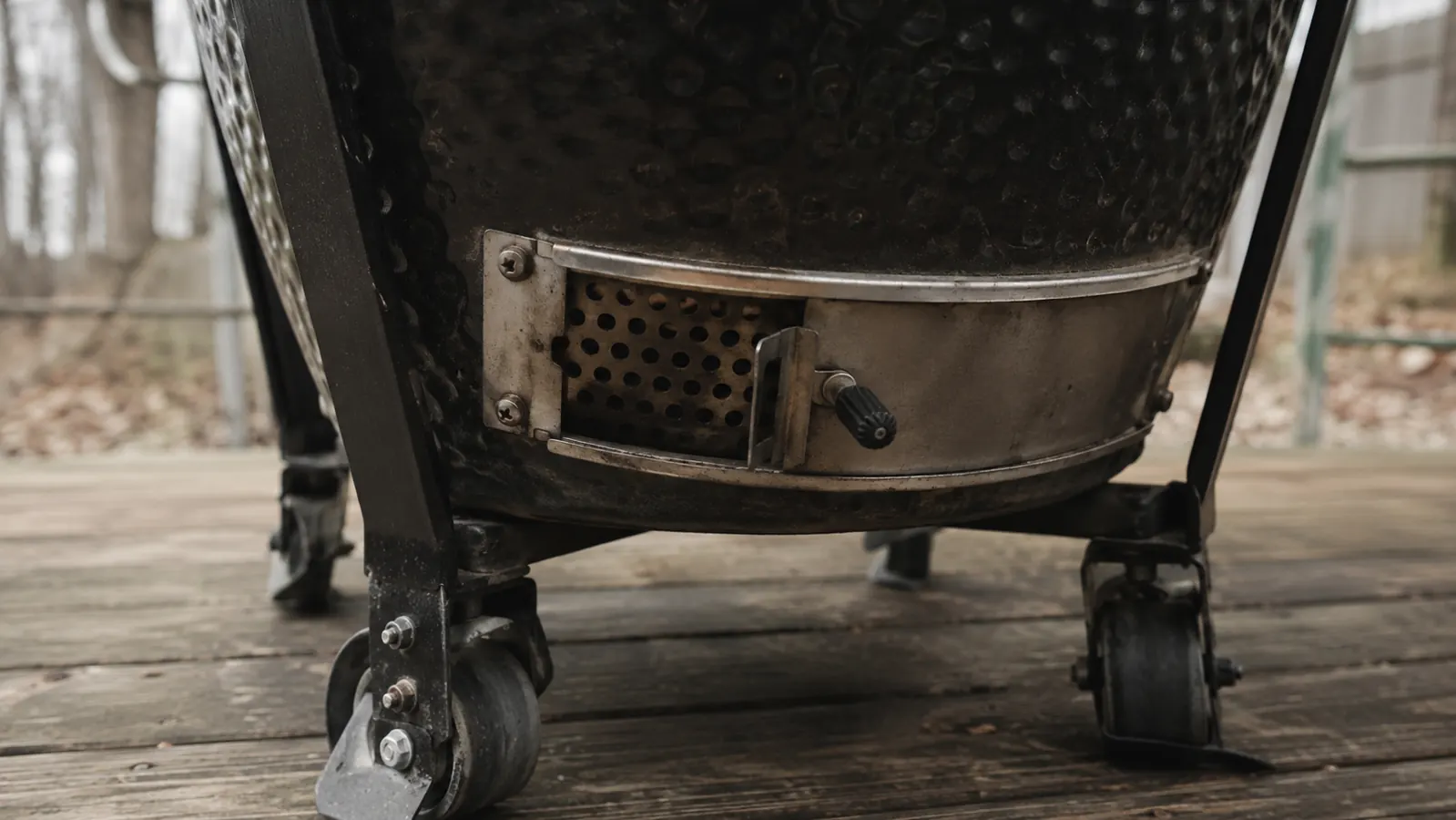
Nobody mentions the plastic vent wheel in the five-star reviews. Six months into owning the Char-Griller AKORN Kamado Charcoal Grill and Smoker, the small plastic knob that controls the bottom damper developed a hairline crack after repeated high-heat cooks, and I now turn it with a folded rag because the edges have gone sharp. That is not a dealbreaker on its own. But it is exactly the kind of detail that gets left out of the glowing writeups, and it is the reason I wanted to write this piece separately from my long-term review, as its own honest accounting rather than a footnote.
I am not walking this back. I still cook on the AKORN most weeks, and I still think it is a smart way to get into kamado-style cooking without paying solid-ceramic prices. But if you read only the enthusiastic reviews before you buy one, you are going to hit a handful of surprises in the first few months that nobody warned you about, and I would rather you hear them from someone who actually owns the grill, cooks on it regularly, and has no reason to flatter it, than find out the hard way on your own deck.
The Quick Verdict
A genuinely capable steel kamado with a handful of real corner-cutting under the surface. Worth it if you know what you are buying. A little frustrating if you expected ceramic-kamado polish at a steel-kamado price.
Amazon Check Today's Price →Thinking About a Kamado? Read This Before the Five-Star Reviews Talk You Into It.
The Char-Griller AKORN is a good grill with a few real flaws worth knowing about first. Check today's price on Amazon and decide with the full picture, not just the highlight reel.
Amazon Check Today's Price on Amazon →How I Actually Put This Thing Through Its Paces
I did not write this after one weekend with the grill. I have run the Char-Griller AKORN through six months on a 12 by 14 back deck, alongside a 22-inch charcoal kettle I have relied on for eleven seasons. Where my long-term piece walks through the arc of that whole stretch, this one is deliberately narrower and more skeptical. I went back through my notes specifically looking for the moments where the AKORN fell short of what the marketing copy and the top reviews on Amazon implied, and I cross-checked them against actual cook logs rather than relying on memory, because memory tends to sand the rough edges off a product you already like.
That meant tracking things I would not normally bother tracking. I timed how long the bottom vent wheel lasted before it cracked. I logged every time the built-in lid thermometer disagreed with a separate instant-read probe. I weighed the assembled cart on a bathroom scale out of curiosity after a neighbor asked how heavy it actually was to move, and I wrote down every small repair or workaround I ended up making along the way. None of that shows up in a typical five-star review written after one cookout, and all of it changed how I would set expectations for someone buying their first AKORN.
This is money I spent myself, on a grill nobody sent me to review. I am telling you this upfront because an honest review with actual complaints in it is worth more than another glowing writeup, and I would rather lose a sale than have someone unbox this thing expecting zero compromises, only to feel misled six weeks later when the first small issue shows up.
The Gasket and the Thermometer, the Two Things Nobody Mentions
Start with the felt gasket that seals the lid, because it is the part of the Char-Griller AKORN that most affects how the grill actually cooks. Out of the box it looked fine and sealed fine. By month two, on the hinge side specifically, it had compressed unevenly enough that I could watch a thin ribbon of smoke escape on windy evenings even with the lid fully latched. During one stretch of steady spring rain, that same section of gasket held enough moisture that it started to smell faintly musty when I lifted the lid, something I did not expect from a felt strip rated for outdoor use. A replacement gasket kit from Char-Griller solved it, but that is money and a delay you should plan for inside the first year, not treat as a maybe, and it is the single most common complaint I have seen echoed once you dig past the star rating on other owners' reviews.
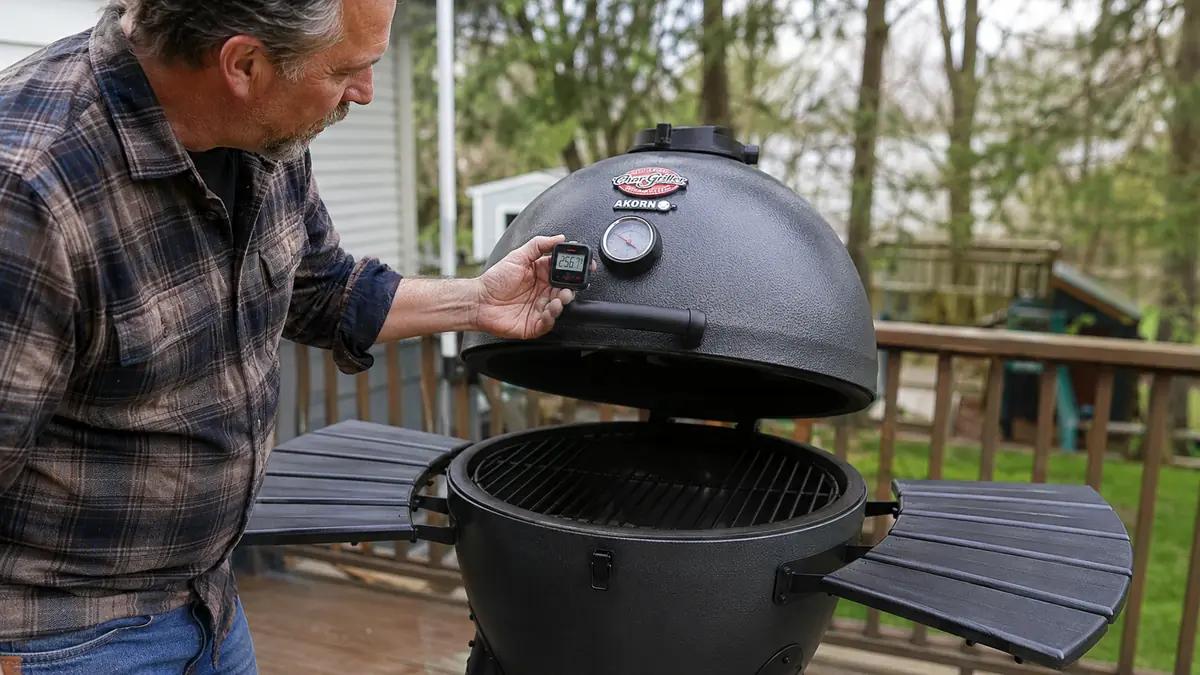
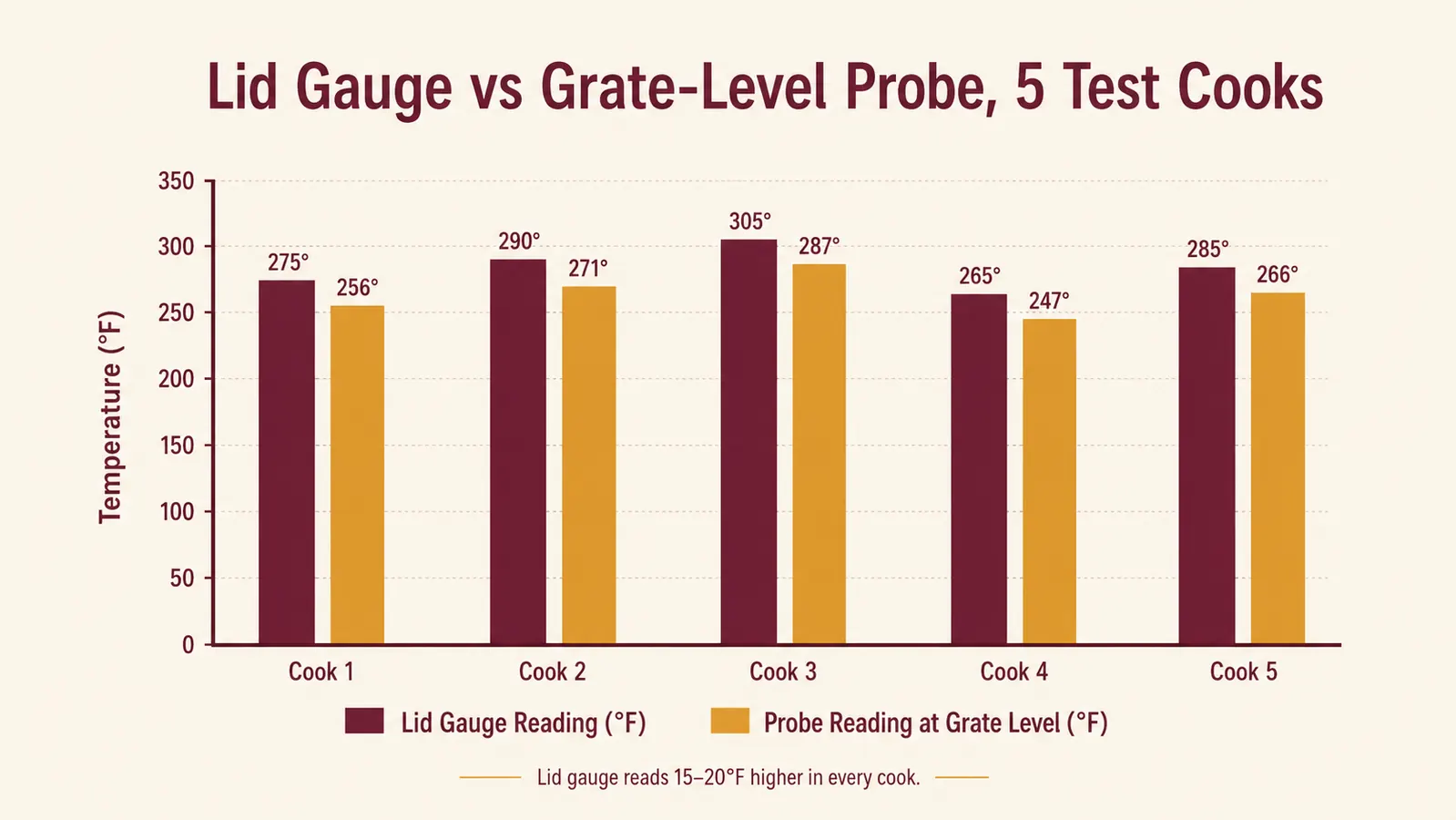
The built-in dome thermometer is the second thing that quietly undersells this grill. I ran five separate cooks where I logged the lid gauge reading against a cheap instant-read probe held at grate level, and the lid gauge ran consistently 15 to 20 degrees hotter than what the food was actually experiencing. On a long cook where I am trying to hold a steady 225 degrees, that gap is the difference between a properly rendered pork shoulder and one that dries out two hours early. I now ignore the built-in gauge almost entirely and rely on a separate probe thermometer clipped to the grate, an inexpensive add-on that nobody mentions you will basically need if you want the AKORN to actually hit the temperatures you think it is hitting.
Neither of these is catastrophic. Both are fixable with a little extra money and a little extra patience. But if you are budgeting the Char-Griller AKORN as a complete, ready-to-go package straight out of the box, you should quietly budget in a replacement gasket and a real thermometer, because I do not think you will get through a full year without wanting both, and skipping that step just means finding out the expensive way, on a cook that matters.
Where the Build Quality Actually Cuts Corners
The Char-Griller AKORN is double-walled steel with a ceramic-fiber insulation layer between the panels, not solid ceramic, and that construction choice shows up in a few specific places once you live with the grill for a while. The powder coat on the cart legs, right where they meet the caster wheels, started chipping within the first two months from being rolled across a slightly uneven paver section of my deck. It is cosmetic, not structural, but it is bare metal now in two small spots, and I have had to dab on touch-up paint to keep rust from starting there over the winter, something I never had to think about on my kettle.
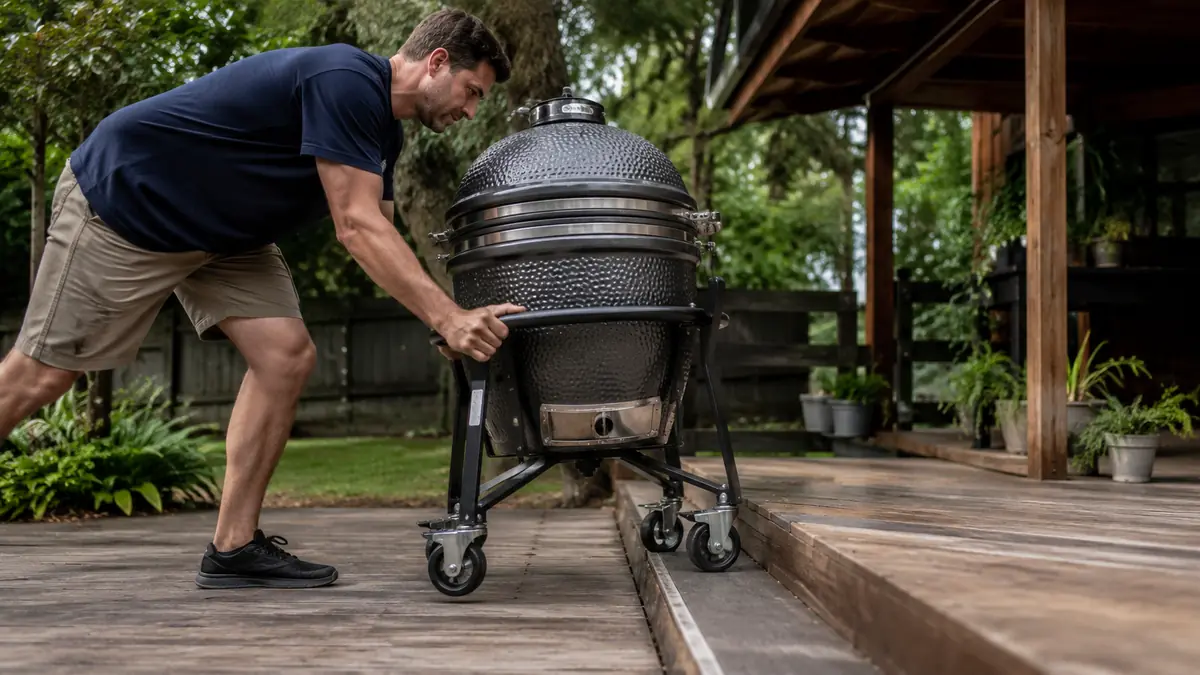
The cart itself surprised me in a different way: this grill is heavier to actually move than the spec sheet suggests once it is fully assembled with charcoal loaded. Two of the four caster wheels do not lock, and on a slight slope near my deck steps, I have had it roll a few inches on its own during a windy afternoon before I wedged a brick against one wheel. Moving it alone, up even a small step, takes real effort and a bit of a knack, not the one-handed shove I expected from looking at the assembled weight listed online, and I would not want to try it on an icy deck.
There is also a break-in smell nobody mentions. The first three or four high-heat seasoning burns put off a noticeably chemical, faintly plastic smell as manufacturing residue burned off the interior and the insulation layer. It cleared up after those first few cooks and never came back, but if you are planning to season this grill right before a dinner party, do it a week or two ahead instead, because that first burn is not something you want drifting over to a table full of guests.
The printed instructions are another spot where the AKORN quietly leaves you on your own. Assembly steps are covered fine, but there is almost nothing about vent settings for different fuel loads, nothing about cold-weather charcoal quantities, and nothing warning you about the gasket or the gauge. Most of what I actually know about running this grill well came from trial and error over six months, not from anything in the box, which is a strange gap for a product built around temperature control.
What I Liked
- Real low-and-slow performance once you know its quirks, holding 225 degrees for 12+ hours
- 445 square inches of cast iron grate space that seasons well over time
- A real fraction of what a solid-ceramic kamado costs at current Amazon prices
- Locking lid latch has stayed tight through six months of regular use
- Cool-to-the-touch lid handle even after long high-heat cooks
Where It Falls Short
- Built-in lid thermometer reads 15 to 20 degrees hotter than actual grate temperature
- Factory felt gasket compresses unevenly and likely needs replacing within the first year
- Bottom vent wheel is plastic and can crack under repeated high-heat use
- Powder coat chips at the cart-leg-to-wheel joint faster than the rest of the body
- Heavier and harder to relocate solo than the spec sheet suggests
- Printed instructions skip real vent and fuel guidance entirely
The AKORN never once failed to cook good food. It just quietly asks you to fix or replace three small things within the first year that the box does not warn you about.
What It Still Does Right, Even After All That
I want to be fair here, because a review that only lists complaints is just as useless as one that only lists praise. Once I stopped trusting the lid gauge and started running a real probe thermometer, the Char-Griller AKORN has been genuinely reliable at the thing that made me buy a kamado in the first place: holding a steady low temperature for hours without me babysitting it. A recent 13-hour pork butt held between 220 and 230 degrees on a single load of charcoal, checked with the probe rather than the built-in gauge, and that kind of unattended stability is still hard to get from my kettle, gasket quirks and all.
The cast iron grates have also held up better than the hardware around them. Across 445 square inches of cooking surface, I have not dealt with warping or hot spots, and they season up nicely as long as I oil them after cleaning. And for everything I have said about the gasket and the vent wheel, the core steel shell and the ceramic-fiber insulation have not let me down on a single cook. The grill still holds heat the way it is supposed to once you compensate for the gauge, the fixes for its known weak points are cheap and well documented by other owners, and I have never once regretted having it on the deck. I go through the direct comparison against a pricier ceramic option in Char-Griller AKORN vs Kamado Joe Classic if you want to see exactly where the extra money for solid ceramic actually buys you something, and where it mostly does not.
It is also worth saying that most of what frustrated me is the kind of thing a first-time kamado owner would blame on themselves rather than the grill. I spent the better part of a month assuming I was bad at reading the thermometer before I finally cross-checked it with a probe and realized the gauge itself was the problem. If I had known that on day one instead of month two, I would have saved myself a stretch of overcooked chicken thighs and one dry brisket flat that I am still a little sore about. That is really the point of this piece: not to talk you out of the Char-Griller AKORN, but to hand you the notes I wish I had before I started.
Who This Is For
This grill makes sense for someone who wants real kamado-style low-and-slow cooking and is willing to treat the first year as a bit of a break-in period, budgeting for a replacement gasket and a separate probe thermometer as part of the actual cost. If you already own basic grilling gear, do not mind a little hands-on maintenance, and want to add serious overnight-cook capability without paying solid-ceramic prices, the AKORN earns its spot on the deck, corner-cutting and all. I walk through the story of how I decided to bring one home in the first place over in this piece, which is a more personal look at that decision and what pushed me toward steel over ceramic.
Who Should Skip It
If you want an appliance-grade experience where nothing needs adjusting, replacing, or troubleshooting in the first year, this is not that grill. Skip it if you are not willing to swap a gasket or add an inexpensive probe thermometer within the first several months, because both of those are close to inevitable rather than a rare bad-unit story. And if moving your grill around the yard regularly matters to you, know going in that this cart is heavier and less nimble solo than it looks in photos. Anyone chasing a flawless unboxing experience, or anyone who wants the manual to actually teach them how to run the grill, should put their money toward a solid-ceramic kamado instead and accept the higher price as the cost of skipping these specific headaches.
Know the Flaws, Still Want One? Here's Where to Get It.
The Char-Griller AKORN earns its keep once you know what to expect from the gasket, the thermometer, and the cart. Check today's price on Amazon and go in with your eyes open.
Amazon See the Char-Griller AKORN on Amazon →